


It was almost Christmas 2018, and we were nearing the end of a three-month trip to Benin
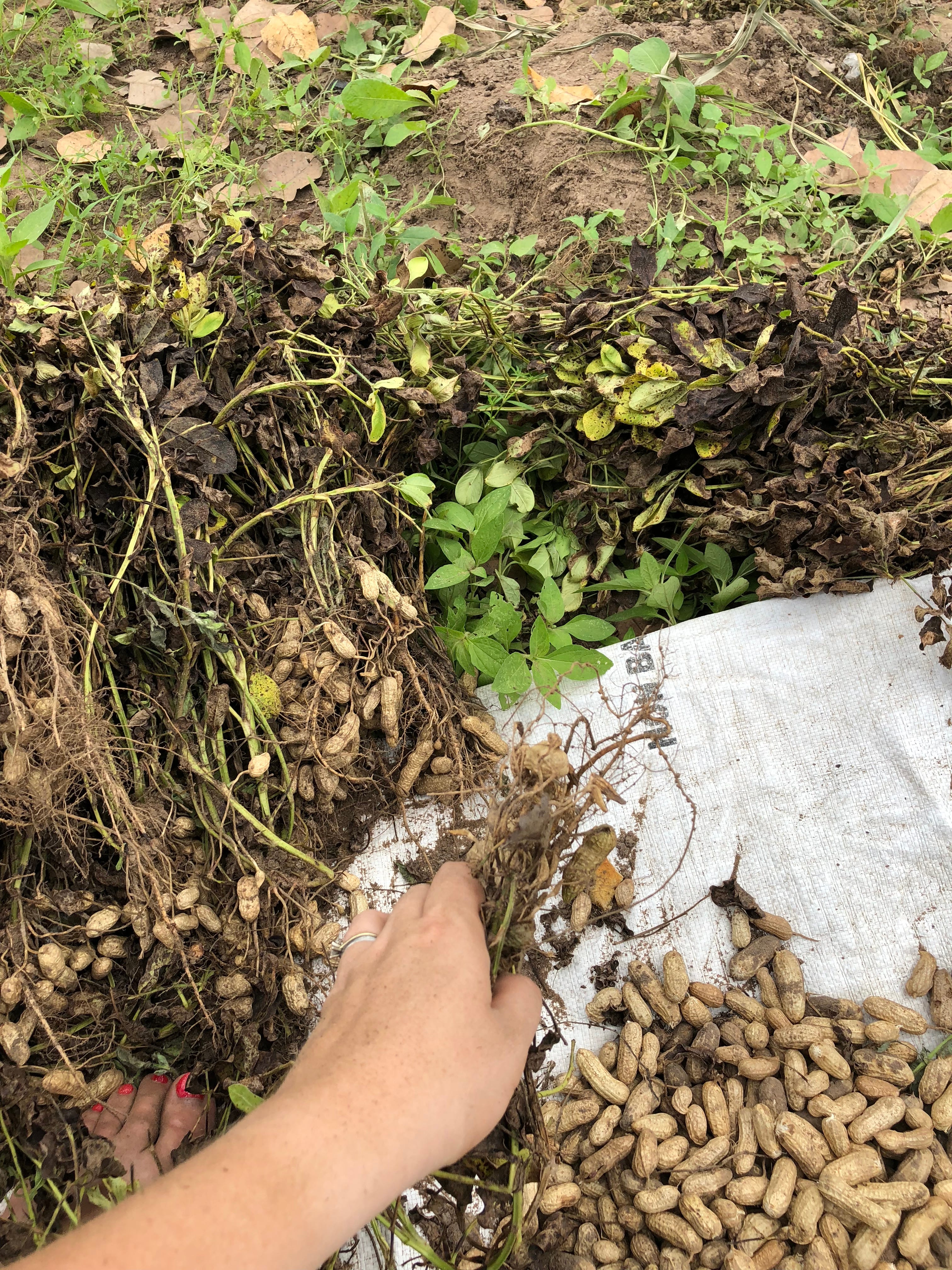
My mother-in-law (Ina), grandmother-in-law (whom we call la grandmere), and I had spent the afternoon shelling peanuts under a tree, sitting together for three or four hours, working through a pile of them, getting them ready to roast so we could bring them home. It was the kind of slow, quiet work that doesn’t need much conversation. Just hands and shade and the sound of peanut shells cracking.
At some point in the afternoon, Ina and la grandmere lay out a mat on the ground underneath the guava tree to rest. It really is the best thing to do on a warm afternoon. La grandmere looked up at me coming out of the house and patted the spot next to her.
She wanted me to come lie down beside her.
So I did…and I almost cried. I felt like she had finally accepted me.
It sounds simple. But if you understand anything about what it means to be a white woman in Benin, to be the outsider who will always be recognizable as someone not originally from there, you understand why that moment meant everything.
On Being an Insider and an Outsider
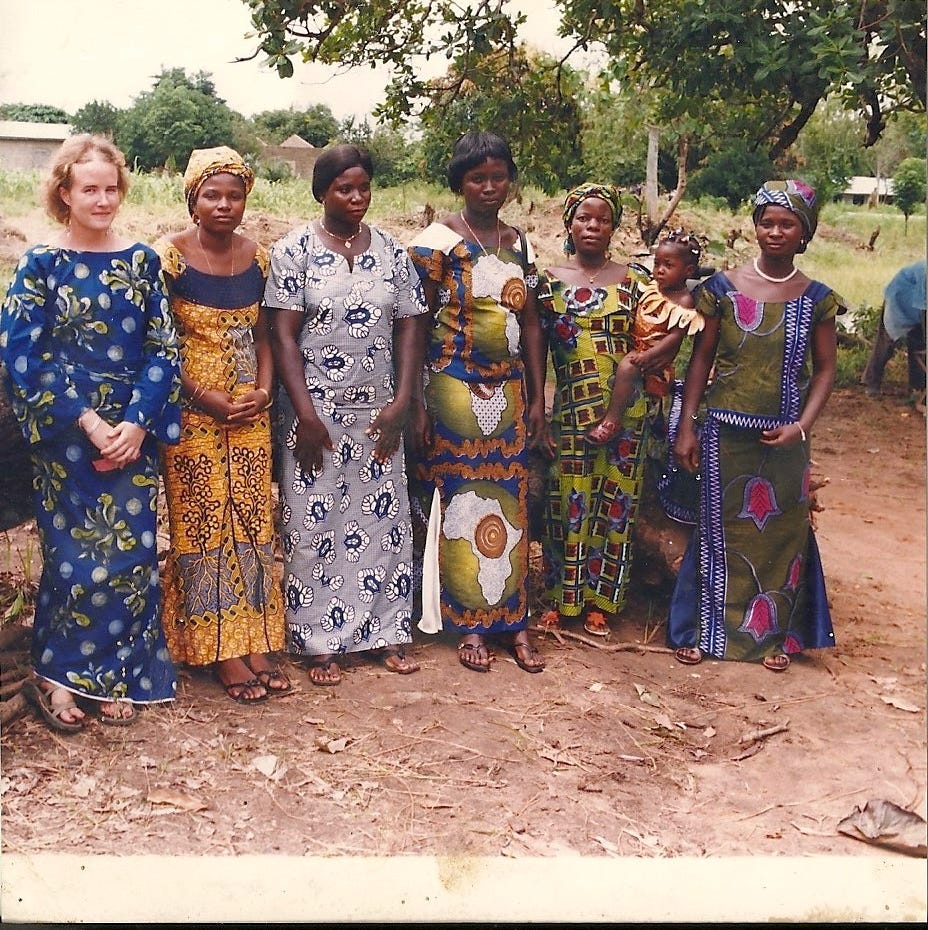
When I wrote my doctoral dissertation, I had to include a statement of positionality, a reflection on how my identity and my position within the field might influence my research. I wrote that I am a returned Peace Corps volunteer who has been associated with Benin for almost two decades, that I became a naturalized Beninese citizen four years ago, and that I am very comfortable in and around Beninese culture and community.
And then I wrote something harder: that I will always be a combination of an insider and an outsider. That my white skin means I am easily identifiable as someone not originally from the area, no matter how many years I have lived there, no matter how fluent my French, no matter how well I know the weekly market and the soccer fields, or how I have tried to learn how to cook la pâte.
This is the reality of going to Benin as someone who looks like me. And I think it is important to talk about, not to make it bigger than it is, but because it will come up if you visit us, and I would rather you know what to expect.
In the villages, especially as you travel north and away from the cities, you become very visible very quickly. Children will call out to you. In the Idaasha region, where I served in the Peace Corps, there is a chant that kids have sung for generations…Oyinbo...Oyinbo…(white person, white person). It originated with missionaries who used to hand out candy, and the children would call out to get the white person's attention.
When I first arrived, I had a choice about how to receive it. I watched other people get upset, and I understood why. It is jarring, especially when it continues over and over and over again. But I also understood that these children were not being cruel. My husband let me know that they were passing on something that had been passed to them, in a place where someone who looked like me was truly unusual. So I learned to roll with it. To join in the banter. To let it be what it was.
What I was not prepared for was how much I would eventually forget about my skin color, and how quickly I would be reminded of it again.
I remember at some point during the Peace Corps, when I hadn’t traveled to the big city in a while, I stopped thinking about it. It just wasn’t something that came up in my daily life in the village anymore. And then I would go to the market in a bigger town and see another white person and stare. I genuinely stared. Wondering who they were, where they were from, what they were doing there. Which is, of course, exactly what everyone else was thinking when they looked at me.
I started calling it the “oh my God, it’s a white person” syndrome. Because, well, I had to call it something!
The Plumber
The other moment I want to tell you about happened a few years later, when D’Aquin and I were in Benin during the pandemic and having some plumbing work done at the house.
We had killed a giant rooster that had been terrorizing the neighborhood, the most enormous rooster you can imagine, loud beyond reason, and we cooked it up with the neighbors so everyone could celebrate the quiet of not hearing the rooster anymore. We all sat together in the gazebo, eating.
The plumber walked in, looked around, and said something that loosely translated to: “Who’s this white woman sitting here?”
My mother-in-law and the neighbor woman didn’t miss a beat.
“There’s no white woman here,” they said. “This is Mama Aden.”
Mama Aden. Mother of Aden. My firstborn son. In Benin, parents are often known by the name of their first child, it is how you become part of a community, part of a lineage. And in that moment, without hesitation, the women who knew me best told the plumber exactly who I was.
Not the white woman. Mama Aden.
The plumber looked surprised. “Oh,” he said. “Okay.”
That was enough.
Why This Matters for Hello West Africa
I want guests who come on a Hello West Africa tour to experience what it feels like to stand out. To be the person who doesn’t quite fit in because of how they look. To feel, even briefly, what it is like to be identifiable as an outsider in a community that is not one's own.
Not because it is uncomfortable, though it can be. But because of what happens on the other side of that discomfort.
In Mezirow’s terms, that feeling is a disorienting dilemma. And it is one of the most powerful things travel can offer. The moment you realize that you are now the minority. That people are looking at you the way you have looked at others your whole life. That you do not blend in, and you cannot make yourself blend in.
And then, if you stay, if you keep going, something shifts. People learn your name. They learn your children’s names. They invite you to sit beside them under a tree. They tell the plumber who you really are.
That is the journey I want to design for people. Not the ultra-comfortable version, the real one.
What Really Happened Last Week
I made my first Instagram post. Woohoo!
It happened because of a conversation I had on Wednesday with a former content marketer who is now venturing out on her own. We talked through some of the things that had been frustrating me about Instagram, and after our Zoom call, I just did it. No perfect hook. No agonizing over the caption. I just posted.
And then I took a deep breath. That wasn’t so bad.
Thursday morning I was on the 5 AM call (with a 4:30 AM wake-up call, although it did come with a fresh cup of coffee thanks to my husband!), with Rebecca Maffeis and the group she had assembled to talk about transformative tourism. No kids woke up until 5:30, which felt like a small miracle. The conversation was extraordinary. There was a woman running Beyond Dracula tours in Romania. A woman from Greece. A man from England who is starting up tours in China around tea, and is also a travel writer. We ended up talking for an hour and forty-five minutes, and I think we could have gone longer.
What struck me most was this: the research and the concept of transformative tourism is still so new that the conversations themselves are the work. That is where I want to be.
I posted consistently on LinkedIn and made some unexpected connections with people I hadn’t anticipated finding there. That keeps happening, and I keep being grateful for it.
What’s Coming Next
Next week is full, or at least full in prepping for a busy week of calls the week after.
I have a Zoom call with Dr. Suzy Ross, one of the first people to write about transformative tourism, who approaches it from a different theoretical lens than I do. We are going to nerd out for an hour talking about transformation and tourism, LOL.
I also have my first Zoom call with Jake Haupert, co-founder of the Transformative Tourism Council and Explorers X, who is now officially an advisor for Hello West Africa. Looking forward to catching up after meeting him in Seattle this past March.
And another call with Rebecca Maffeis and her group, this one at 8 AM, which means the kids will definitely be awake. We’ll see how that goes. But I know the conversation will be incredible!
In addition to all of that, I met someone from a local Bellingham newspaper, The Cascadia, at the Home and Garden Show, and she was interested in my story, so I’m going to reach out to her this week. And I spoke with some people in the solar business there as well, relevant because we plan to install solar panels at the property in Benin, and I want to be a little more informed about the solar panel market.
Also, this Thursday I have the 4th post of the Learning Lens, and I'm starting to draft it today.
A Quick Update on What We Are Building
We are currently raising $300,000 in seed funding to get Hello West Africa up and running.
Here is what that investment will make possible:
THE LIST
☐ Guest bungalows + renovations
☐ Solar & infrastructure
☐ Vehicle + local transport
☐ Container from US with supplies
☐ Operations & admin
☐ Founder salaries (Year 1)
Someone I grew up with connected with me on Instagram and has been helping with the container logistics. She has done a lot of international shipping and has given me incredible insights. I guess that is the other reason I should keep up on Instagram, you never know who is going to reach out!
If you are interested in being part of this, reply to this email. Let’s talk.
What I’m Learning
Talking through things with people who know things you don’t is irreplaceable.
The 5 AM call reminded me that there are people all over the world working on the same questions I am working on, how to design travel experiences that actually transform people, not just impress them. That I am not alone in this. And that my particular lens, the academic research combined with seventeen years of lived experience in Benin, is something I can contribute to that conversation. I’m thinking about the best way I can help tour operators move into this transformational economy a bit more easily.
I am also learning that showing up is most of it. The Instagram post. The 5 AM alarm. The email to the newspaper contact. Most of it is just doing the thing you said you would do.
In My Free Time
D’Aquin played soccer with the boys this week, which is always a joy to watch. He is an extraordinary player, and that is actually part of how we met. He asked me to come watch him play. But that is a story for another issue.
We visited friends and spent time at their house. A normal week in our world, which is its own kind of wonderful.
I am reading Percy Jackson and the Olympians with my middle son Benjamin, we are on book four and they are incredible. I think they would have been more interesting in high school than The Odyssey and The Iliad (no offense Homer!).
And with my oldest Aden, I am reading the first book in The Mysterious Benedict Society series, which I highly recommend for older kids and adults alike.
I also encourage you to put on an evening jazz playlist while cooking dinner. It somehow elevates the experience without leaving your kitchen!
Alrighty, I have kids calling my name. Time to sign off on this issue!
Until next Tuesday,

P.S. — Hello West Africa is looking for aligned investors and Founding Supporters. If you want to be part of building this before the doors open, reply to this email and let’s talk.


